Monday, June 13, 2016

Full Day Kindergarten

In Toronto, Ontario it was a pleasure to make daily visits to Post's Corners Public School in the Oakville neighbourhood. This is a learning environment with beautiful facilities, a calm atmosphere, clean and tidy property, and a place where mothers and fathers walk their children to school and linger for chats at the gate with the teachers and each other.

We took particular note of the Junior school programme. The Full Day Kindergarten for 4 and 5 year olds would be the envy of New Entrant teachers in NZ. The class size is 15 -25 learners and has TWO trained teachers; one a fully qualified ECE teacher and the other a fully qualified primary school teacher. (NB: less than 15 learners and the teacher ratio reduces to one teacher).


Read what they have to say about it on the class site or a snippet below….


Here’s what you can expect:

Enhanced learning during the school day  
  • Teachers and early childhood educators will work together in the classroom to help young children learn and grow. This team approach will bring out the best in your child through activities and play, guided by a new full-day kindergarten curriculum.
A stronger foundation for learning
  • Research shows that early learning has long-term benefits for a child’s academic and social skills. A full day of learning early in life can help improve your child’s reading, writing and math skills later on. It also makes the transition to Grade 1 easier – for you and your child. Good for kids, good for parents, good for Ontario
  • Full-day kindergarten is an investment in our future. It’s part of the government’s plan to better prepare our kids by giving them the tools they need to succeed and build a stronger Ontario.
Read the government research published about Full Day Kindergartens.

My instinctive response was, “Imagine the progress we could make in our Manaiakalani schools if we were resourced like this!” And then remembered, well actually our MDTA classes do have two teachers and evidence to date has proven significant acceleration is possible.
See Michelle and Karen’s posts from 2014 and Steph from 2016 - all New Entrant teachers demonstrating the benefit of a powerful pedagogy and two teachers.

Thursday, June 2, 2016

Capturing Great Images


Anyone of the MDTA cohorts or teachers who have worked with me on making film and teaching children movie making skills will be in no doubt about my passionate advocacy for the simple tripod.


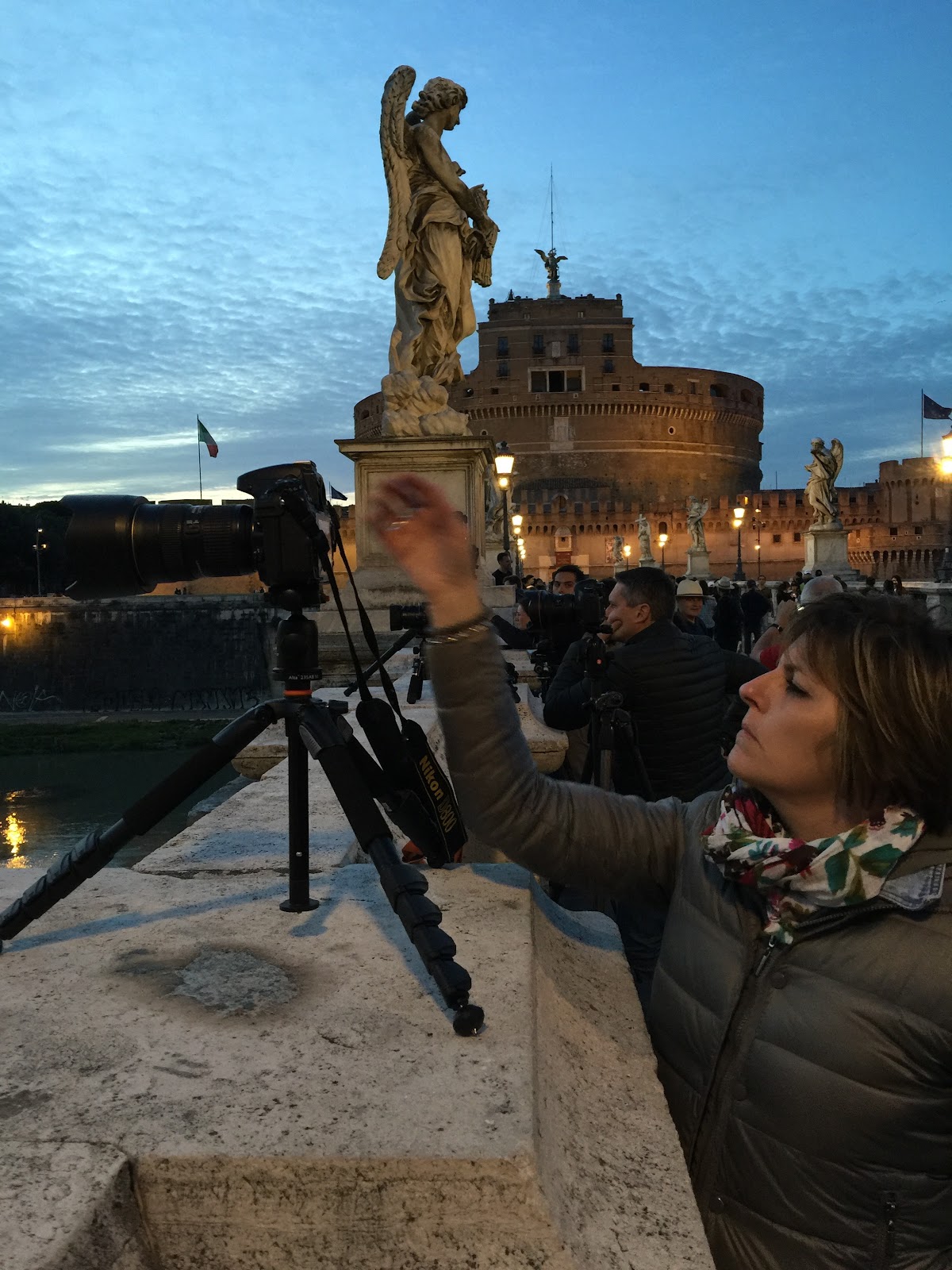
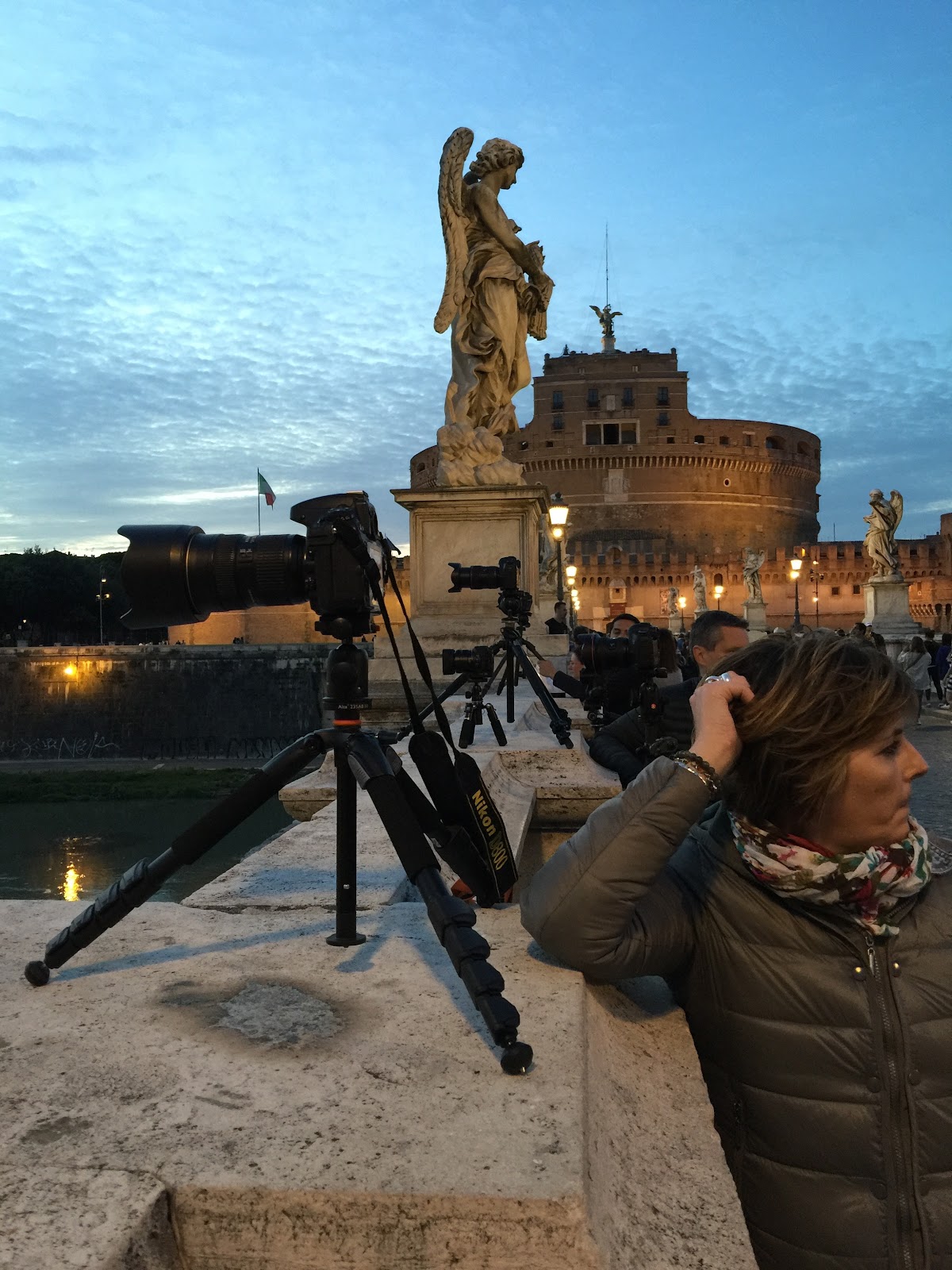
I was thinking of my colleagues when I took these photos (no tripod, but elbows on the railing in lieu) on the Ponte Sant'Angelo spanning the Tiber River in Rome.


Professional photographers were lining up to capture the magnificent sunset followed by the evening illuminations of Castel Sant'Angelo and other buildings.

I couldn't resist grabbing my phone and capturing this unexpected sight on our evening stroll to the Vatican.


They all had set-up tripods and I think one would feel uneasy joining their lineup without one!


Right now across our Manaiakalani schools our clever teachers are up-skilling themselves to create a movie with their learners to share on the BIG screen at the Manaiakalani Film Festival 2016. Every year we dissect the difference between the movies that are a hit with the audience - because that is the ultimate test, right? - and the rest. It is always the same answer.


Three things:

  • A compelling story, to paraphrase Kevin Roberts. Engaging the audience' emotions whether through humour, pathos, sympathy, joy, adrenaline or whatever. The story is essential.
  • Vision. Are we going to feel sea sick watching this? Did you use a tripod? Did you keep your back to the light source (windows, fluro lights)? These are not fancy techniques for frazzled classroom teachers. Just common sense tips.
  • Sound. Consistent sound levels. Clear speech. Background music only used if needed and used well. The post production team can do a lot to improve the sound you if you keep the sound clear and consistent.

And yes, I do recognise the irony of using inferior 'snaps shots' to illustrate this piece :)

cross posted on Not in One Hundred and Forty blog

Monday, April 25, 2016

Tāku Reo Rangatira


At midday it was a pleasure to be taken to a school that felt like home!  We were welcomed with food, with conversation, with singing and got to spend time in the classrooms. This is a school where the community has to work hard to accelerate learning outcomes as the learners have challenging life circumstances and varied entry points into schooling.


As we arrived during lunchtime we were taken into a workroom and school parents brought us each a plate of home-made food, some of it straight out of an umu. While we ate together we talked about the journey the school and principal Lisa Ann Higa were on. I took photos of the vision planning and PLD that was on the walls and shared them in the embedded slide show at the foot of this post.


Nānākuli Elementary School services the Hawaiian Homesteads of Nānākuli Valley and Princess Kahanu Estates. In addition to instruction in English, a Hawaiian Language Immersion strand provides instruction in the Hawaiian language. We visited the immersion unit and were greeted beautifully. 


The teacher, Kai Mana, loves his kids and they love him (and said so).


There  was some excitement here because these kids had been involved in the Google Hang-Outs around the Mālama Honua Landing at Pt England beach. They were using their MacBook Airs to create logos for the school values in Google Draw and the children were keen to show us and to talk about their learning with us - in English!


With the adults the conversation inevitably turned to their language and the pride the school and learners feel in being able to contribute to the strengthening of their native language which had been in danger of being lost. I was reminded of the song we sing about this, Tāku Reo Rangatira.


Before we left we had a time together under the trees (no aircon blasting out in this school!) where we sang to each other.


Learning Innovation

Our second visit was a bonus as it was not on our original itinerary. We went down the road to Mililani Waena Elementary School and the management team, in the absence of the principal Dale Castro, at very short notice put together an amazing learning experience for us.  We spent time with Sean Takashima , Catherine Upton and Barron Iwamura  - the VPs - who shared with us the school Vision, Mission and Beliefs about learning.


Mililani Waena is a Character Counts school. They promote the 6 Pillars of Character -- Trustworthiness, Responsibility, Respect, Fairness, Caring, and Citizenship. We have seen this in action at Pt England school when Michelle George introduced it to her class.


Despite the cultural, socio economic and geographic differences, there was an instant connection with the learning and teaching happening in this school. These children all have a MacBook Air as their personal learning device (they received a $1 million grant to purchase technology!) and the school has a strategic approach to implementing digital learning environments. We greatly appreciated their open invitation to walk into classrooms and talk to children about their learning. This turned out to be one of the few occasions this happened during the week. Teachers were co-teaching and had created modern learning environments out of traditional learning spaces. This slide will look very familiar to Manaiakalani teachers.


I particularly enjoyed hearing about the specialist position they have created titled “Learning Innovation Specialist”. It sounded very similar to roles I have occupied.  While it clearly involves leading technical innovation, the role is better defined and empowered by using “learning” rather than “digital” terms.


It was testing week in Hawaiian schools, including OECD tests for PISA, so everywhere we went during the week we encountered quiet areas where children were sitting in rows writing exams. Mililani Waena has a set of scooters for testing week that children can use to let off steam after taking an exam!

Cross posted here

Where Eagles Soar

Our first school visit in Hawaii was to Hale Kula Elementary School (soon to be officially known as Daniel Inouye Elementary School) on the Schofield Barracks Army Installation and began bright and early with a 6:00 am pickup by our wonderful tour guide Brendan Brennan.  We had quite an eventful start to the day, but more about that later!


We were warmly greeted and hosted at the school by Principal Jan Iwase and her leadership team.

A highlight of the school was seeing Learn, Create, Share in action through the eyes of a group of children who were keen to share their Project Based Learning with us.


Nyla had been working on a way to build a better product and chose the disposable coffee pods that have become ubiquitous in American homes. She was designing a reusable, biodegradable filter that could be used instead of the plastic environmentally unfriendly items in current use. We saw the prototypes she had created and the movie she made at home while she tested it out on the family.

 
Her movie was shared on the school’s YouTube channel.

Teachers will be interested to see how this project template was designed by the teacher in a shared Google Doc to support the learning, including colour-coded staging points for when each step of the process was due to be complete.

This school is high decile but has an interesting point in common with us. The children move in and out of the school at a significant rate.  Most of the 970 students are dependents of military personnel assigned to Hawaii and so move around a lot, making transition and deployment issues unique challenges for the school. From our own experience of transience we understand that this means the school has a short space of time to transition learners into the school community and to accelerate learning before they move on.


The circumstances of our visit did tempt me to title this post “Foreign Nationals”, but I didn’t want to detract from the quality learning experience we had at this school.  We had been pre-warned to carry our passports as we would be entering a military base, but this was not sufficient.  Brendan had obtained clearance in advance but it was only satisfactory for him as a US citizen.  We were given a very curt dismissal at the gate and told that as “Foreign Nationals” we were denied access.  This was disconcerting to say the least, compounded by the soldier on duty radioing all the other gates as we backed out to warn them to be on guard for Foreign Nationals attempting to enter by another gate!

Brendan drove us a block away and then contacted the school to let them know what had happened.  Fast forward half an hour of anxious conversation... the school located a staff member who was military personal.  She drove out to meet us down the road. We both got in her car and she drove us through an entrance gate without a problem. Not so for Brendan.  He drove back through, carrying the correct paper work for his own entry and was delayed while his vehicle was given a thorough search. Apparently they even looked for the Foreign Nationals under the car bonnet - which is quite flattering really!